Toxic Productivity and the Myth of More
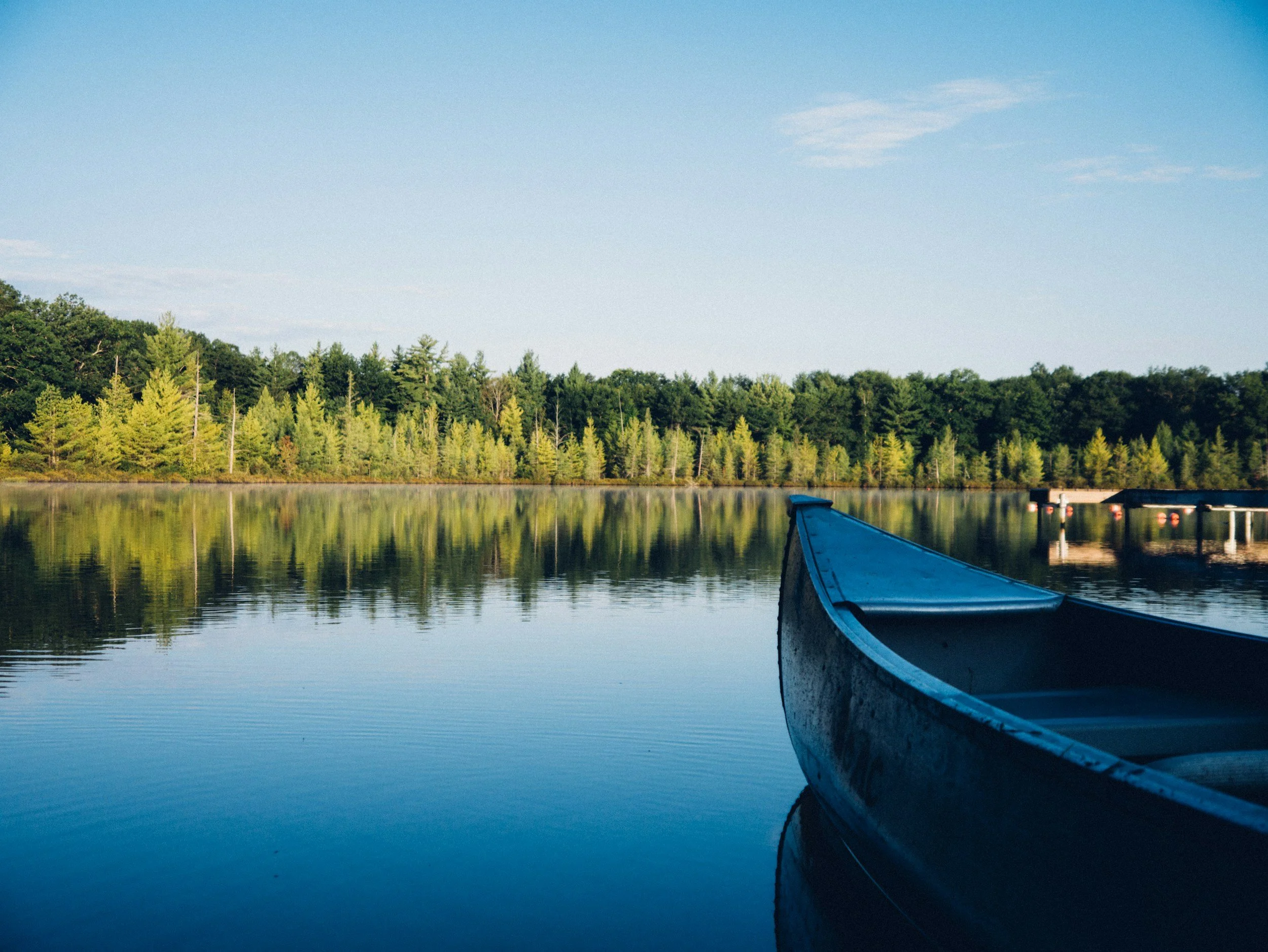
Photo by Aaron Burden on Unsplash
I’m working from Hannawa Falls, NY this week, and my “office” is a screened-in porch that looks out over the water. I’m getting so much done, checking things off, moving work forward like I always do but because of what we talked about a few weeks ago with the effects of nature on the brain, I feel more relaxed than I do sitting at my desk at home.
And still, there’s a part of my brain that isn’t satisfied.
It’s the same voice that shows up when I go out for a run and end up walking, the one that whispers that I should be doing more, pushing harder, proving something. It tells me that being near the water isn’t enough if I’m not in it, that having a kayak within reach somehow becomes a missed opportunity instead of a gift.
To be clear, I specifically came here to work. This was not supposed to be a vacation; this was supposed to be working with a better view. But even in a moment I intentionally created, my brain attempts to convince me that I am still falling short.
This feeling is a result of how deeply many of us have learned to tie our worth to output.
There is growing research around what psychologists call “toxic productivity,” where self-worth becomes linked to how much we accomplish, and rest starts to feel like something we have to earn instead of something we inherently need. At the same time, studies show that perfectionism and the pressure to constantly achieve have been steadily rising for decades, bringing with them higher levels of anxiety and self-doubt.
With toxic productivity and perfectionism dominating our culture, it makes sense that even in a place designed for peace, part of my brain is still scanning for ways I’m not doing enough.
When thoughts like this begin to dominate, I like to go to the research and remind myself that even small amounts of time in nature have measurable effects on stress. Being near water, what researchers call “blue space,” has been linked to improved mood, lower stress, and even measurable physiological relaxation, sometimes within minutes.
Not using the kayak doesn’t cancel out the benefit of sitting by the water.
Walking doesn’t cancel out the benefit of getting outside.
Slowing down doesn’t cancel out the fact that you are still showing up for your life.
The next time you have thoughts like me, remember the goal isn’t to squeeze the maximum possible value out of every moment, but to recognize that some moments are already doing exactly what they’re supposed to do.