The Flag Was Still There
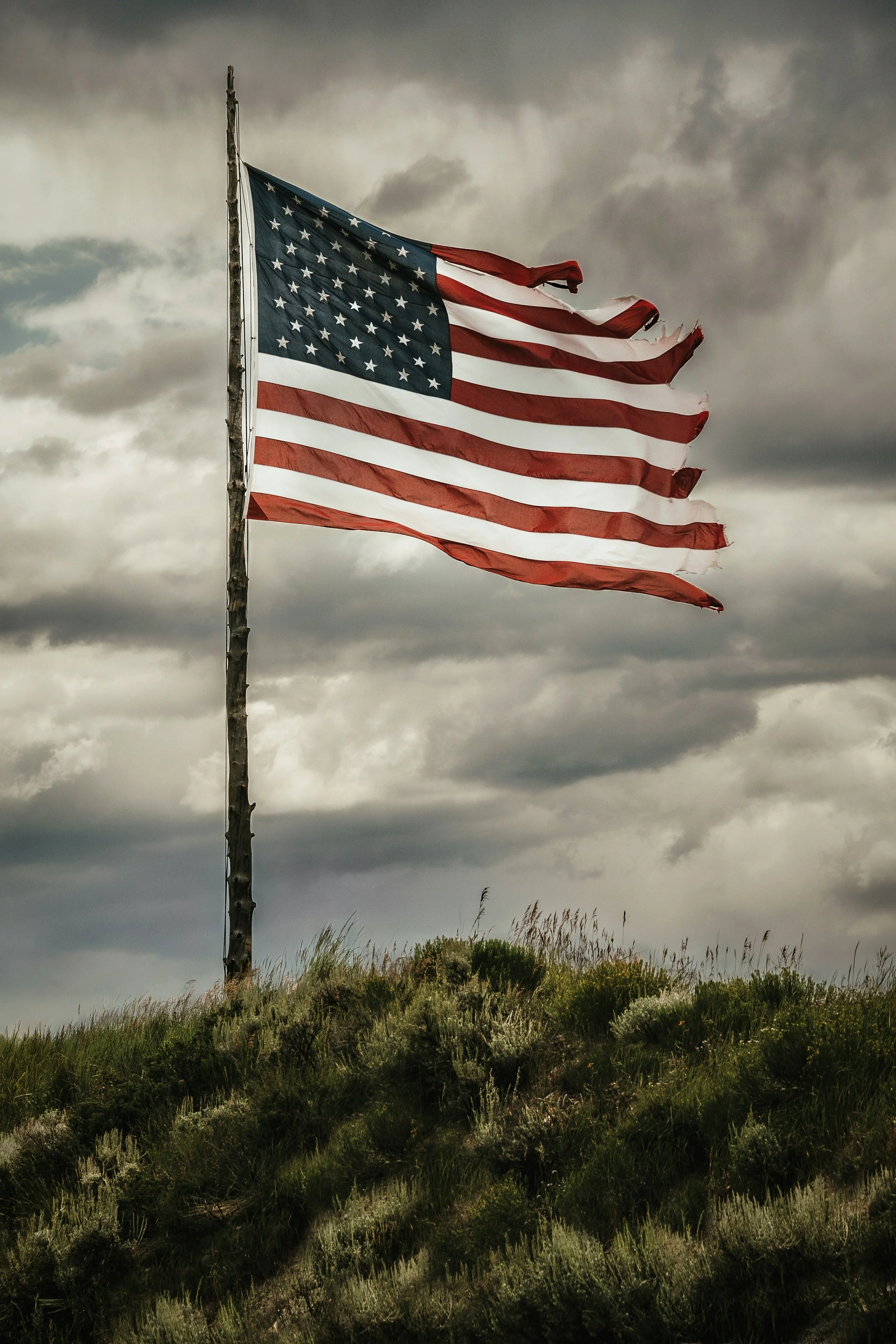
Photo by Tim Mossholder on Unsplash
Today, America turns 250, which means I have been thinking a lot about what it means to celebrate a country you live in, and should love, while also being furious about the direction it is moving.
For me, patriotism has never meant pretending America has always gotten it right. It has never meant ignoring slavery, Indigenous dispossession, Jim Crow, voter suppression, sexism, homophobia, transphobia, or the countless ways this country has denied people the very freedoms it claimed to protect. The Declaration of Independence said that “all men are created equal,” but from the beginning, that promise was written more broadly than it was practiced.
The America I believe in is not the one that was perfect in 1776; it was never perfect.
The America I believe in is the one people have been fighting to create ever since.
I believe in the America of Frederick Douglass, Harriet Tubman, Ida B. Wells, Sojourner Truth, Mary Church Terrell, Pauli Murray, Ella Baker, Fannie Lou Hamer, Bayard Rustin, Marsha P. Johnson, Sylvia Rivera, and so many others who looked at the words “all men are created equal” and demanded that this country mean them. They did not fight because America had already fulfilled its promise; they fought because they knew the promise was worth forcing into reality.
I hate that the American flag has been treated by some as shorthand for MAGA, Christian nationalism, exclusion, and fear. I hate seeing a symbol that should belong to all of us used to suggest that only some people are “real” Americans. That is not the America I stand for.
We were not founded to be a Christian nation. I say that again. We were not founded to be a Christian nation. We were founded around ideas of liberty, conscience, self-government, and freedom from imposed rule. The Constitution does not establish Christianity as the national religion, Article VI prohibits religious tests for public office, and the First Amendment protects both religious freedom and freedom from government-established religion.
Freedom of religion does not mean one religion gets to rule everyone else. Freedom does not mean powerful people get to decide whose history can be taught, whose identity can be recognized, whose body can be controlled, whose vote can be diluted, or whose rights are negotiable. That is why this anniversary feels less like a birthday party to me and more like a call to attention.
We are living through a moment when rights people fought generations to secure are being challenged, narrowed, or rolled back. Federal DEI programs have been targeted for termination. LGBTQ+ protections have been rescinded or weakened. Gender identity is being erased from federal recognition. Abortion rights were stripped of federal constitutional protection in Dobbs. Even public history, including LGBTQ+ history, has become a battleground.
This is not abstract. It is not theoretical. It is not just politics as usual. It is a fight over who gets to belong.
As I sat down this morning, on the 250th anniversary, I didn't intend to write about it. I had another post already written and lined up for this weekend, but as I stared out at all the American Flags hanging, I thought about the Star-Spangled Banner.
I know the anthem has its own complicated history, as most American symbols do, but the part that always gets me is the image of looking through the smoke after a long night of attack and seeing that the flag was still there. I tear up every time because Francis Scott Key wrote those words after the British bombarded Fort McHenry for 25 hours and the American flag was still flying the next morning.
That image moves me because it is not about domination. It is about endurance. It is about people who made it through the night. It is about the relief of realizing that the fight is not over because you have not been defeated.
That is what I want people to feel when they see the flag.
Not Christian nationalism.
Not exclusion.
Not fear.
Not a country where freedom only belongs to the people who already have the most power.
I want them to see the flag and remember that America has always been shaped by people who refused to accept the narrowest version of it. People who marched, organized, wrote, voted, taught, testified, resisted, and kept going even when the country told them to wait their turn.
Two hundred and fifty years in, the work is not finished.
For me, that is how I will mark this anniversary. Not with blind celebration, but with recommitment.
The flag is still there.
The promise is still unfinished.
The fight is still ours.
People Who Expanded the Meaning of “All Men Are Created Equal”
None of these people were asking America to abandon its founding promise. They were asking America to finally include them in it.
Frederick Douglass (1818-1895) was an abolitionist, writer, and former enslaved person who exposed the contradiction between American ideals of liberty and the reality of slavery, challenging the nation to live up to its founding principles. Source: https://www.nps.gov/frdo/learn/historyculture/frederick-douglass.htm
Harriet Tubman (c. 1822-1913) escaped slavery and repeatedly returned to the South to guide enslaved people to freedom through the Underground Railroad, risking her life to expand liberty for others. Source: https://www.nps.gov/hatu/index.htm
Sojourner Truth (c. 1797-1883) escaped slavery and became a nationally known advocate for abolition and women's rights, challenging both racism and sexism throughout her life. Source: https://www.womenshistory.org/education-resources/biographies/sojourner-truth
Elizabeth Cady Stanton (1815-1902) helped organize the Seneca Falls Convention and authored the Declaration of Sentiments, which argued that women deserved the same political rights and opportunities as men. Source: https://history.house.gov/Exhibitions-and-Publications/WIC/Historical-Essays/No-Lady/Womens-Rights/
Lucretia Mott (1793-1880) was an abolitionist and women's rights advocate who helped organize the Seneca Falls Convention, a foundational event in the women's rights movement. Source: https://history.house.gov/Exhibitions-and-Publications/WIC/Historical-Essays/No-Lady/Womens-Rights/
Susan B. Anthony (1820-1906) devoted decades to the women's suffrage movement and became one of the most influential advocates for women's voting rights in the United States. Source: https://www.britannica.com/biography/Susan-B-Anthony
Ida B. Wells-Barnett (1862-1931) was a journalist, anti-lynching activist, suffragist, and civil rights leader who used evidence and investigative reporting to expose racial violence and advocate for justice. Source: https://www.womenshistory.org/education-resources/biographies/ida-b-wells-barnett
Mary Church Terrell (1863-1954) was an educator, suffragist, and civil rights leader who helped found the National Association of Colored Women and fought for both racial and gender equality. Source: https://www.nps.gov/people/mary-church-terrell.htm
Ella Baker (1903-1986) was one of the most influential grassroots organizers of the Civil Rights Movement, helping build leadership and organizing efforts through the NAACP, SCLC, and SNCC. Source: https://www.nps.gov/people/ella-baker.htm
Fannie Lou Hamer (1917-1977) fought voter suppression in Mississippi, helped found the Mississippi Freedom Democratic Party, and became one of the nation's most powerful voices for voting rights. Source: https://www.nps.gov/people/fannie-lou-hamer.htm
Pauli Murray (1910-1985) was a lawyer, activist, writer, and Episcopal priest whose legal theories helped shape later victories against racial segregation and sex discrimination. Source: https://www.womenshistory.org/education-resources/biographies/pauli-murray
Bayard Rustin (1912-1987) was a principal organizer of the 1963 March on Washington and an openly gay civil rights leader who advocated for racial justice and LGBTQ+ equality. Source: https://www.nps.gov/people/bayard-rustin.htm
Martin Luther King Jr. (1929-1968) led the Civil Rights Movement's campaign for racial equality through nonviolent protest and helped secure passage of landmark civil rights legislation. Source: https://www.nps.gov/malu/index.htm
Marsha P. Johnson (1945-1992) was a Black gay liberation activist who participated in the Stonewall era movement, joined the Gay Liberation Front, and co-founded STAR to support vulnerable LGBTQ+ people. Source: https://www.si.edu/stories/marsha-johnson-sylvia-rivera-and-history-pride-month
Sylvia Rivera (1951-2002) was an LGBTQ+ rights activist who spent decades advocating for legal protections, inclusion, and support for transgender and gender-nonconforming people, co-founding STAR with Marsha P. Johnson. Source: https://www.si.edu/stories/marsha-johnson-sylvia-rivera-and-history-pride-month
Mary Pickersgill (1776-1857) was the Baltimore flag maker who created the enormous flag that flew over Fort McHenry in 1814 and inspired Francis Scott Key to write "The Star-Spangled Banner." Source: https://www.si.edu/spotlight/flag-day/banner-facts
Grace Wisher (c. 1800s) was an African American indentured servant who helped sew the Star-Spangled Banner alongside Mary Pickersgill and others, contributing to one of America's most enduring national symbols. Source: https://www.si.edu/object/nmah_463144
Francis Scott Key (1779-1843) wrote the lyrics that became "The Star-Spangled Banner" after witnessing the American flag still flying over Fort McHenry following the British bombardment in 1814. Source: https://www.nps.gov/fomc/learn/historyculture/the-star-spangled-banner.htm
Our Complicated History
The history of American freedom is not a straight line. Nearly every right we celebrate today was first denied to someone, then demanded by citizens who refused to accept exclusion as the final answer.
The Declaration of Independence states that "all men are created equal." The Declaration of Independence, adopted on July 4, 1776, states that "all men are created equal" and possess certain unalienable rights, including life, liberty, and the pursuit of happiness. Source: https://www.archives.gov/founding-docs/declaration
The promise of equality was not applied equally in 1776. At the nation's founding, slavery existed, women could not vote, many Indigenous nations were displaced, and political participation was largely restricted to white men. The nation's ideals and its realities were often in conflict. Source: https://www.nps.gov/articles/000/declaration-of-independence-and-slavery.htm
Americans seeking expanded rights have often used the nation's founding ideals as a tool for change. From Frederick Douglass's critiques of slavery, to Elizabeth Cady Stanton's Declaration of Sentiments, to civil rights activists demanding equal protection under the law, reformers repeatedly argued that America should live up to the promises made in the Declaration of Independence. Sources: https://www.archives.gov/founding-docs/declaration & https://history.house.gov/Exhibitions-and-Publications/WIC/Historical-Essays/No-Lady/Womens-Rights/
Women gained constitutional voting rights in 1920, but many Black women still could not effectively vote. The Nineteenth Amendment, ratified in 1920, prohibited denying the vote on the basis of sex. However, many Black women, especially in the South, continued to face poll taxes, literacy tests, intimidation, and violence that prevented them from exercising that right. Meaningful federal protection and enforcement arrived with the Voting Rights Act of 1965. People Associated with This Progress: Elizabeth Cady Stanton, Lucretia Mott, Susan B. Anthony, Ida B. Wells-Barnett, Mary Church Terrell, Countless Black suffragists whose contributions were often marginalized. Sources: https://www.history.com/articles/the-fight-for-womens-suffrage & https://history.house.gov/Exhibitions-and-Publications/WIC/Historical-Essays/No-Lady/Womens-Rights/ & https://www.wjcl.com/article/barriers-breakthroughs-voting-rights-evolved-america-250-history/71604832
Black voting rights continued to be restricted long after the Civil War. The Fifteenth Amendment, ratified in 1870, prohibited denying the vote on the basis of race. In practice, many states used poll taxes, literacy tests, grandfather clauses, and intimidation to suppress Black voters for generations. The Voting Rights Act of 1965 significantly strengthened federal protections. People Associated with This Progress: Frederick Douglass, Fannie Lou Hamer, Ella Baker, Bayard Rustin, Martin Luther King Jr. and John Lewis. Source: https://www.wjcl.com/article/barriers-breakthroughs-voting-rights-evolved-america-250-history/71604832
Married women once had limited legal rights. For much of American history, married women had limited property rights and legal independence under laws derived from English common law. States gradually passed Married Women's Property Acts throughout the 1800s. People Associated with This Progress: Elizabeth Cady Stanton, Lucy Stone, Ernestine Rose and Early women's rights advocates. Source: https://www.womenshistory.org
Women were excluded from most colleges, professions, and public leadership roles for much of American history. Throughout the nineteenth century, women faced significant barriers to higher education, professional careers, and political participation. Women's rights advocates fought for equal access to education, employment, and citizenship. People Associated with This Progress: Elizabeth Cady Stanton, Susan B. Anthony, Lucretia Mott, Mary Church Terrell and Pauli Murray. Source: https://history.house.gov/Exhibitions-and-Publications/WIC/Historical-Essays/No-Lady/Womens-Rights/ & https://www.britannica.com/topic/woman-suffrage/The-United-States
School segregation was ruled unconstitutional in 1954. In Brown v. Board of Education (1954), the Supreme Court ruled that racial segregation in public schools violated the Equal Protection Clause of the Fourteenth Amendment. Pauli Murray's legal theories later influenced arguments used in civil rights litigation. People Associated with This Progress: Pauli Murray, Thurgood Marshall, NAACP Legal Defense Fund attorneys and Parents and students who challenged segregation. Sources: https://www.womenshistory.org/education-resources/biographies/pauli-murray & https://www.naacpldf.org
The Civil Rights Act of 1964 outlawed many forms of discrimination. The Civil Rights Act prohibited discrimination on the basis of race, color, religion, sex, and national origin in many areas of public life and employment. People Associated with This Progress: Martin Luther King Jr., Ella Baker, Bayard Rustin, Fannie Lou Hamer, Diane Nash and Medgar Evers. Source: https://www.archives.gov/milestone-documents/civil-rights-act
The Voting Rights Act of 1965 strengthened protections against racial discrimination in voting. The Voting Rights Act targeted discriminatory voting practices and dramatically increased access to the ballot box for many Black Americans. People Associated with This Progress: Fannie Lou Hamer, John Lewis, Martin Luther King Jr., Diane Nash and Bayard Rustin. Source: https://www.archives.gov/milestone-documents/voting-rights-act
The United States Constitution does not establish Christianity as the national religion. The Constitution contains no declaration of a national religion. Article VI prohibits religious tests for public office, and the First Amendment prohibits Congress from establishing a religion while protecting religious liberty. Source: https://www.law.cornell.edu/constitution-conan/amendment-1/early-interpretations-of-the-religion-clauses
The Treaty of Tripoli stated that the U.S. government "is not, in any sense, founded on the Christian Religion." The treaty was ratified unanimously by the Senate and signed by President John Adams in 1797. Historians note that the statement appeared in the English version of the treaty and continues to be debated and interpreted in historical scholarship. Source: https://firstamendment.mtsu.edu/article/1797-treaty-of-tripoli/
Some states maintained official religious establishments after the founding. Although the federal government prohibited establishment of religion, several states maintained religious establishments for years after the Constitution was ratified. Massachusetts did not fully disestablish its state-supported religion until 1833. Source: https://www.law.cornell.edu/constitution-conan/amendment-1/early-interpretations-of-the-religion-clauses
The Star-Spangled Banner was inspired by the Battle of Fort McHenry. Francis Scott Key wrote the poem that became the national anthem after witnessing the American flag still flying over Fort McHenry following a 25-hour British bombardment in September 1814. People Associated with This History: Francis Scott Key, Mary Pickersgill and Grace Wisher. Sources: https://www.si.edu/spotlight/flag-day/banner-facts & https://www.nps.gov/fomc/learn/historyculture/the-star-spangled-banner.htm
The flag that inspired the anthem was sewn by Mary Pickersgill and her assistants, including Grace Wisher. The famous flag was made in Baltimore by Mary Pickersgill with assistance from several young women, including Grace Wisher, an African American indentured servant. Source: https://www.si.edu/spotlight/flag-day/banner-facts & https://www.si.edu/object/nmah_463144
The national anthem has a complicated history because the man who wrote it, Francis Scott Key, enslaved people, and later verses of the song contain language that some historians and critics associate with the defeat of people who escaped slavery and joined the British during the War of 1812. As a result, many Americans view the anthem as both a symbol of freedom and a reminder of the nation's contradictions. Source: https://www.si.edu/spotlight/flag-day/banner-facts & https://www.nps.gov/fomc/learn/historyculture/the-star-spangled-banner.htm & https://www.archives.gov/founding-docs/declaration
LGBTQ+ Americans faced widespread discrimination for much of U.S. history. The Stonewall uprising of 1969 became a catalyst for the modern LGBTQ+ rights movement and inspired decades of activism and advocacy. People Associated with This Progress: Marsha P. Johnson, Sylvia Rivera, Stormé DeLarverie, Barbara Gittings and Frank Kameny. Source: https://www.si.edu/stories/marsha-johnson-sylvia-rivera-and-history-pride-month & https://www.npca.org/articles/2736-the-unsung-heroines-of-stonewall
Same-sex marriage became legal nationwide in 2015. In Obergefell v. Hodges, the Supreme Court held that same-sex couples have a constitutional right to marry. People Associated with This Progress: Jim Obergefell, Edith Windsor and Countless LGBTQ+ activists and legal advocates. Source: https://www.oyez.org/cases/2014/14-556
The Supreme Court overturned Roe v. Wade in 2022. In Dobbs v. Jackson Women's Health Organization (2022), the Supreme Court held that the Constitution does not confer a right to abortion and returned abortion regulation to elected governments. Source: https://constitutioncenter.org/the-constitution/supreme-court-case-library/dobbs-v-jackson-womens-health-organization & https://www.supremecourt.gov/opinions/21pdf/19-1392_6j37.pdf
The Trump administration rescinded several Biden-era LGBTQ+ executive orders in 2025. Executive actions issued in January 2025 rescinded executive orders related to LGBTQ+ equity, gender policy initiatives, and certain federal nondiscrimination efforts. Source: https://www.kff.org/lgbtq/overview-of-president-trumps-executive-actions-impacting-lgbtq-health/
The Trump administration ordered the elimination of many federal DEI programs in 2025. Executive Order 14151 directed federal agencies to terminate DEI and DEIA offices, programs, initiatives, and related activities to the maximum extent permitted by law. Source: https://www.govinfo.gov/content/pkg/DCPD-202500118/pdf/DCPD-202500118.pdf & https://www.congress.gov/crs_external_products/IN/PDF/IN12497/IN12497.2.pdf
Federal policy changes in 2025 redefined sex for federal government purposes. A January 2025 executive order directed federal agencies to define sex as an immutable biological classification and remove recognition of gender identity in various federal contexts. Source: https://www.kff.org/lgbtq/overview-of-president-trumps-executive-actions-impacting-lgbtq-health/
LGBTQ+ history became a subject of public controversy in 2025. The National Parks Conservation Association documented removals and alterations of LGBTQ+ historical content from National Park Service websites, including references to transgender and queer individuals. Source: https://www.npca.org/articles/7142-parks-group-condemns-erasure-of-lgbtq-history-from-park-service-website & https://www.npca.org/articles/2736-the-unsung-heroines-of-stonewall
A note from one human to another: I have personally checked every one of these references and facts, but if I missed something or you believe I misrepresented something, please let me know so I can consider it and, if proven false, correct it. I value truth and historical accuracy and to the best of my ability strive to achieve it in everything I write.