The First Scientist
There are many moments when we hear about the first time a woman did something. Or I suppose it would be more accurate to say the first time a woman was allowed to do something.
My entire life I grew up hearing about people like Sandra Day O'Connor (first woman to serve on the United States Supreme Court - 1981), Sally Ride (first American woman in space - 1983), and Aretha Franklin (first woman inducted into the Rock & Roll Hall of Fame - 1987). And to this day I continue to hear about amazing firsts from women like Kamala Harris (first woman Vice President of the United States - 2021), Sarah Thomas (First woman to referee a Super Bowl - 2021), and Ketanji Brown Jackson (First Black woman on the United States Supreme Court - 2022).
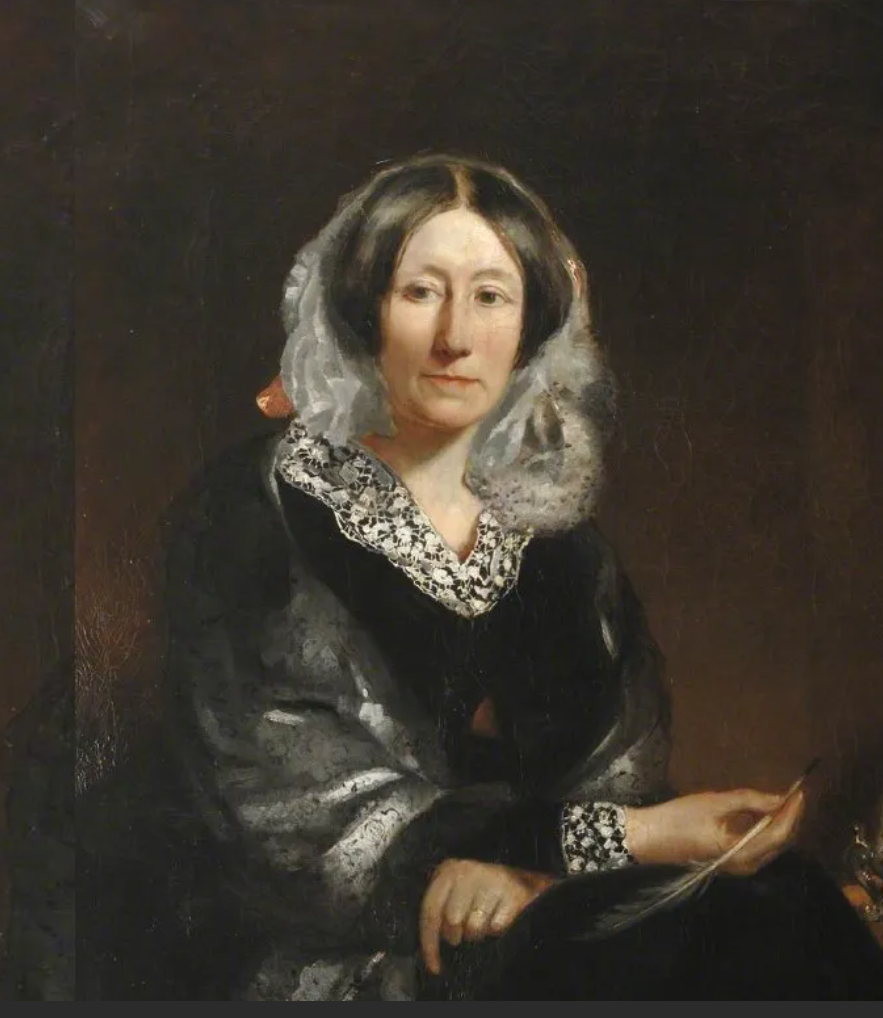
All these women, and so many others, have widened the path in ways that still shape our lives. Their stories matter, and I hope we never stop hearing new ones, but the story that caught my ear this week wasn’t about the first woman to enter a field; it was about the person whose brilliance forced the world to invent a new category altogether. Mary Somerville wasn’t the first woman scientist. She was, quite literally, the first scientist - she just happened to be a woman.
In 1834, Mary Somerville published a book so sweeping, so elegantly interconnected, that it refused to stay in one lane. Was she a mathematician? Yes. A physicist? Also yes. An astronomer? Absolutely. A geologist? That too. She was, in every sense, a mind that spilled over the edges of the categories men had built.
At the time, the accepted label for someone who studied the natural world was “man of science.” But Mary Somerville was not a man and more importantly, she was not a person who could be contained by one narrow title. When William Whewell reviewed her work, he realized the language itself was too small and the world needed a new word, one expansive enough to describe a mind like hers.
So he coined one: scientist.
As we step into Women’s History Month, Mary Somerville offers us a reminder that women have not only shaped history but have reshaped the very language we use to describe genius, curiosity, and discovery. This month, let’s celebrate the women who didn’t fit the categories they were handed; the ones who broke them open for the rest of us.